
Immigration has consistently played a pivotal role in shaping the economic and social landscapes of nations around the world. By facilitating the movement of people across borders, immigration brings labor and skills and fosters innovation, cultural exchange, and economic dynamism. This article delves into how immigration influences global competitiveness, examining its impact on labor markets, innovation, economic resilience, and cultural diversity. Understanding these connections can provide valuable insights into the strategic importance of immigration for maintaining and enhancing global competitiveness.
Immigration as an Economic Engine
Immigration is a fundamental driver of economic growth in many countries. Immigrants contribute to the labor force, filling essential roles in various sectors, from agriculture and construction to technology and healthcare. This influx of labor helps to mitigate labor shortages, boost productivity, and sustain economic expansion. In the United States, for example, immigrants make up a significant portion of the workforce in critical industries, providing the labor needed to maintain competitiveness in the global economy.
Beyond filling labor gaps, immigrants often bring with them entrepreneurial spirit and innovation. Many of the most successful companies globally, including numerous Fortune 500 firms, were founded or co-founded by immigrants or their descendants. These businesses generate substantial revenue and create jobs, drive technological advancements, and contribute to the overall economic dynamism of their host countries. The entrepreneurial activities of immigrants are crucial in fostering an environment where new ideas can flourish, leading to the development of products and services that enhance global competitiveness.
The Role of Immigration in Innovation
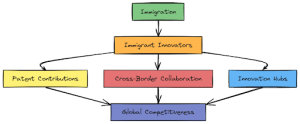
Innovation is one of the most significant areas where immigration exerts a profound impact. Immigrant inventors and entrepreneurs are responsible for a considerable share of patents, technological breakthroughs, and the creation of innovative startups. In the U.S., immigrants are credited with producing approximately 36% of the nation’s innovative output, despite representing a smaller percentage of the population.
This significant contribution to innovation can be attributed to the diverse perspectives and experiences that immigrants bring. Their ability to navigate between different cultural and intellectual landscapes often leads to creative problem-solving and the development of novel ideas. Immigrants are also more likely to engage in cross-disciplinary research and development, further enhancing their impact on innovation. This capacity to innovate and adapt is a critical component of maintaining a competitive edge in rapidly evolving global markets.
Cultural Diversity and Competitive Advantage
Cultural diversity, significantly influenced by immigration, is another crucial factor that enhances global competitiveness. Diverse teams are known to perform better in problem-solving and creativity, bringing together a wide range of viewpoints and approaches. This diversity fosters a dynamic and innovative work environment, which is essential in industries that rely on creativity, technology, and complex decision-making processes.
Moreover, companies that embrace cultural diversity are better equipped to understand and penetrate global markets. As globalization continues to expand, businesses need to cater to a broad and varied customer base. A workforce that reflects this diversity can develop products and services that resonate with different cultural groups, thereby increasing the company’s reach and competitiveness on a global scale. The ability to tap into diverse cultural insights allows businesses to be more responsive to global consumer trends, enhancing their market position.
Immigration Policies and Their Impact on Competitiveness
The competitiveness of a nation is intricately linked to its immigration policies. Countries that adopt open and welcoming immigration policies are often able to attract top talent from around the world, thereby boosting their innovation capabilities and economic resilience. For instance, the United States has historically benefited from policies that attracted skilled immigrants, many of whom have played crucial roles in maintaining the country’s technological and economic leadership.
On the other hand, restrictive immigration policies can hinder a country’s competitiveness by limiting its access to global talent. Such policies may lead to labor shortages, reduce the flow of innovative ideas, and ultimately weaken the economic dynamism that is essential for staying competitive in the global economy. The negative impact of restrictive immigration policies is not only felt in the short term but can also have long-lasting effects on a nation’s ability to lead in sectors that rely heavily on skilled labor and innovation.
The Global Competition for Talent
As the global economy becomes increasingly knowledge-based, the competition for skilled talent is intensifying. Countries around the world are competing to attract high-skilled immigrants who can drive innovation and contribute to economic growth. Programs like the European Union’s Blue Card initiative and Canada’s Express Entry system are designed to attract skilled workers from abroad, recognizing that these individuals are crucial for maintaining and enhancing global competitiveness.
The ability to attract and retain talent is now seen as a critical factor in determining a nation’s economic success. Countries that offer favorable conditions for immigrants, such as a welcoming environment, high quality of life, and opportunities for professional development, are more likely to succeed in this global talent race. This strategic advantage is becoming increasingly important as nations seek to build robust, innovation-driven economies that can compete on the global stage.
Economic Resilience Through Immigration
Immigration also plays a vital role in enhancing the economic resilience of nations. By diversifying the workforce and introducing new skills, immigrants help economies to adapt to changing global conditions and recover more quickly from economic shocks. During economic downturns, immigrant entrepreneurs are often instrumental in revitalizing local economies by starting new businesses and creating jobs.
Additionally, immigration can help address demographic challenges, such as aging populations in many developed countries. Immigrants tend to be younger and more economically active, which can help to balance age demographics and sustain economic growth over the long term. This demographic boost is particularly important for maintaining the fiscal stability of social welfare systems, as it ensures a steady flow of workers contributing to the economy.
Conclusion: The Strategic Importance of Immigration
The link between immigration and global competitiveness is clear and multifaceted. Immigrants drive economic growth, fuel innovation, and enhance cultural diversity, all of which are essential components of a nation’s ability to compete in the global economy. As countries navigate the complexities of the modern economic landscape, those that recognize the strategic importance of immigration and adopt policies to attract and integrate global talent will be best positioned to lead in the 21st century.
To maintain and enhance their global competitiveness, nations must continue to foster environments that are welcoming to immigrants. This involves creating favorable immigration policies and ensuring that immigrants can fully participate in the economic and social fabric of their new homes. By doing so, countries can harness the full potential of immigration to drive innovation, growth, and global leadership, securing their place in an increasingly interconnected and competitive world.